I wrote this topic from a viewer's suggestion.
In Japan, the school club are common.
I knew that this system is not always common in the other country.
So I introduce on this blog.
Students usually belong to a school club.
(In Japan students go to elementary school from 6 to 12 years old
students go to the junior high school from 13 to 15 years old
students go to the high school from 16 to 18 years old)
In my case, when I was in elementary school, I had to belong to one school
club. I was in softball club. I used to play the softball club about one hour on
every Tuesday. When I was in the elementary school, the club activity was one of the classes.
When I was in junior high school, I used to be in baseball club.
And when I was in high school, I used to be in baseball club.
I had to go to the club after the school almost everyday. I used to practice the baseball
until around 7:00 P.M. almost everyday. And when I was in high school, I used to practice
until 9:00 P.M.
The club activity is divided into two type, sports and culture.
About sports, there are clubs such as, baseball, basketball, volleyball,track and field,
judo, kendo, swimming, and so on
Culture clubs are like art(drawing, music),and learning traditional Japanese culture
(such as Sa dou or Ka dou)
Sa dou is the study of a tea-ceremony.
Ka dou is the study of flower arrangement.
In the conversation between Japanese people,
it is common to talk about what kind of clubs they belonged to when we were child.
The kind of the club depends on each school. So, I hear unusual club. It is good topic
when you talk with Japanese people.
Yesterday, I heard the convesation between the co-workers of the restaurant where
I am working now. She was hight school student. She decided to belong to the
''Sa Ka'' dou club. (maybe the students of the club learn the both of Sa dou and Ka dou)
She said she decided just because she can eat sweets not because she is eager to learn
traditional culture. ^ ^ ; (in Japan, usually bringing sweets to school is not allowed.
Eating sweets is a special privilege of Sa dou club students )
I opened facebook page.
http://www.facebook.com/SeeMyJapan
Sunday, October 14, 2012

Saturday, October 13, 2012
Japanese Kikubari ~ 3 ~ When you take off shoes


As I wrote before, Kikubari in Japanese means ''taking care of the other person''
As you may know, in Japan, people take off their shoes when you get in the house.
And you have to take off shoes when you go to restaurant.
When you take off the shoes, we Japanese turn around our shoes.
The reason is because it is easier when you put on the shoes.
We do this not only for myself but also for the other person.
This behavior is very polite in Japanes culture.
For example, you invite the guest at your home, you would do for the guest.
But the visitor was very polite, he or she would do that by him or her self.
I think many Japanese restaurants do this service .
Japanese expression ~1~ Kisetsu kan
Thank you for checking my blog. ^ ^ The viewers have been increasing these days.
Each language reflects each own culture.
So, I would like to introduce Japanese expression on this column.
That is... Kisetsu kan
Kisetsu = season kan = sense
Japan is known for the clear individuality of four season.
I found a Japanese good expression that shows the Japanese culture.
Japanese people sometimes say ''Kisetsu kan ga aru.'' 'Kisetsu kan ga nai''
If I translate directly, it means '''you have the good sense of feeling season'
''you have the bad sense of feeling season''
(''aru = there is'' ''nai = there is not'')
For example, you use this expression when you eat the foods of best season at restaurant.
In Japanese culture, people praise someone who have the Kisetsu kan.
So, Japanese people say ''Asoko no mise no ryouri ha kisetsukan ga atte ii.'' between
Japanese in the daily conversation.(translation : That restaurant serves you a good season dishes.)


Each language reflects each own culture.
So, I would like to introduce Japanese expression on this column.
That is... Kisetsu kan
Kisetsu = season kan = sense
Japan is known for the clear individuality of four season.
I found a Japanese good expression that shows the Japanese culture.
Japanese people sometimes say ''Kisetsu kan ga aru.'' 'Kisetsu kan ga nai''
If I translate directly, it means '''you have the good sense of feeling season'
''you have the bad sense of feeling season''
(''aru = there is'' ''nai = there is not'')
For example, you use this expression when you eat the foods of best season at restaurant.
In Japanese culture, people praise someone who have the Kisetsu kan.
So, Japanese people say ''Asoko no mise no ryouri ha kisetsukan ga atte ii.'' between
Japanese in the daily conversation.(translation : That restaurant serves you a good season dishes.)


Friday, October 12, 2012
Japanese lifesyle ~4~ The system of Japanese toilet


I introduce Japanese toilet system on this column. In Japan, we often see a tap on the toilet tank.
When you flush the toilet, the water in the tank needs to be fulled every time.
The water is poured into the tank, after you flush the toilet.
The good thing is that you can wash your hand by the water.
The advantage of This system is...
You can save water!!
I wrote this column because I heard this Japanese system was original.
Is that true?
Japanese lifestyle ~ 3 ~ futon tataki

Japanese people sleep on futon.
When we clean the futon, we dry under the sun. Some ticks die by drying under the sun.
And we usually use the futon tataki.
(see above)
Japanese people have belived we can dust the ticks by beating the futon.
But I found a information on internet. That is, ''beating by futon tataki was useless to dust the ticks''.
Beating by futon tataki may just damage your futon.
The cottons in the futon may be damaged.
I did not know that... ^ ^ ;
I found photos.There are many design of futon tataki.
In tokyo, people have not used futon tataki these days.
Thursday, October 11, 2012
Don't do this in Japan ~2~ hot spring
Mostly, Japanese people do not say directly about what they think in mind.
In our culture, Japanese avoid saying what they think in mind.
So, you must be hard to know what Japanese people really intend.
In Japan, there is a hotspring the monkey like to get in. Here is called
''JIGOKUDANI YAEN-KOEN''. A lot of turist from abroad visit at this hot spring.
You may get in the hot spring, when you come to Japan.
What I want to write on this topic in this time is ''wash your body before you get
in the hot spring.''
Basically, Japanese people keep everything clean.
Usually, there is some small buckets around the hot spring. Those stuff are for
washing your body.
I hear there are some hot springs where they don't allow foreigners to use
the hot spring. The reason is the other Japanese usuers complain about foreign people.
In Japan, there was a news. a foreign people sued the hot spring owner for
the discrimination.(The the plaintiff lost the case.)
But I think there are not many hot springs which do not allow foreigners to use.
As long as you keep the Japanese rule, you don't have to worry about it.
Wednesday, October 10, 2012
Japanese anime ~ 2 ~ Zaku tofu
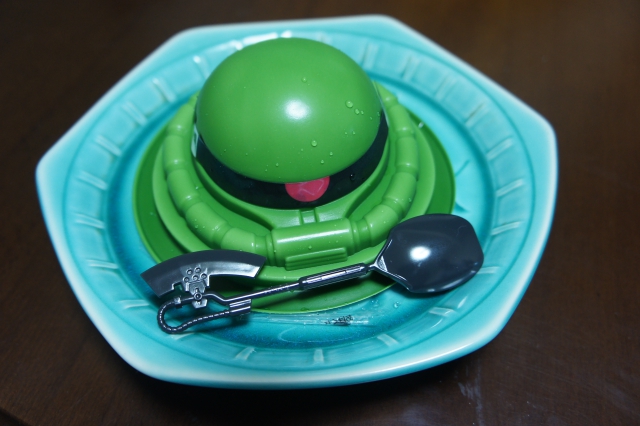
Today, I went to a public hall to listen to the lecture. Five presidents of company gave a lecture.
You may have heard Japanese traditional food, ''tofu''.
Usually, tofu looks like below.

The president of the company who gave us the lecture produced the Zaku tofu
these days. Now, a lot of GUNDAM fans are buying the ''Zaku tofu'' in Japan.
Zaku tofu is a boom in Japan now.
Can you tell the green stuff (see above ) tofu?
I think only Japanese people in the world can invent this kind of stuff.
Subscribe to:
Posts (Atom)